





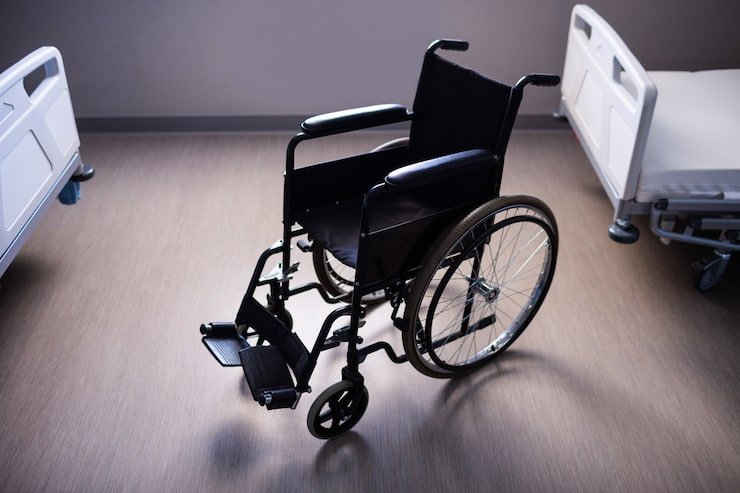
MRI Safe Wheelchair for Secure Patient Mobility in MRI Departments
Mobility can become a significant consideration when patients attend an MRI examination. Some people can walk independently, while others depend on a wheelchair because of long-term mobility limitations, temporary weakness, injury, or a medical condition.
Within an MRI department, wheelchair selection requires additional attention because of the strong magnetic field associated with MRI systems. A wheelchair intended for use in an MRI environment must have appropriate safety characteristics for its designated application.
An MRI safe wheelchair can provide healthcare teams with a practical mobility option for patients who need wheelchair support during their imaging journey. Aayan Medical Imaging Limited supplies medical equipment to NHS Trusts and private healthcare providers across the United Kingdom, supporting the needs of modern clinical environments.
Why Wheelchair Selection Matters Around MRI Equipment
MRI scanners use powerful magnetic fields. This means equipment cannot be selected solely on the basis of whether it works effectively as a conventional wheelchair.
Materials and components need to be assessed according to their suitability for the intended MRI environment. Healthcare staff should always follow the scanner manufacturer’s requirements, local MRI safety policies, and the equipment supplier’s documented guidance.
This is particularly important when transporting patients through controlled areas near the scanner.
Supporting Patients With Mobility Limitations
Not every MRI patient can comfortably walk from the waiting area to the scanning room.
A patient may require wheelchair support because of:
- Permanent mobility impairment
- Temporary injury
- Reduced endurance
- Neurological or musculoskeletal limitations
- Recovery after treatment
- General physical weakness
Providing an appropriate mobility option can help staff accommodate these patients without requiring unnecessary walking or transfers.
Minimising Unnecessary Patient Transfers
Repeated transfers between different mobility devices can be uncomfortable and may create additional handling requirements.
For some patients, using a suitable wheelchair for the relevant stages of their MRI visit may help reduce unnecessary movement.
This can be particularly relevant for patients who experience pain, fatigue, balance difficulties, or restricted mobility.
However, the appropriate transfer method should always be determined by trained staff after considering the patient’s condition and the requirements of the examination.
Important Features for Healthcare Procurement
Choosing an MRI safe wheelchair requires more than checking whether the product is labelled for MRI use. Procurement teams should review the technical documentation and consider how the equipment will be used within their specific facility.
MRI Safety Information
Healthcare providers should verify the wheelchair’s stated MRI safety classification and understand the conditions under which it can be used. The product should only be taken into relevant MRI areas according to manufacturer instructions and local safety procedures.
Patient Support
The wheelchair should provide appropriate support for the patient population expected to use it. Factors such as seating dimensions, weight capacity, posture, and ease of patient handling can be relevant to clinical suitability.
Braking and Stability
Stable positioning is important during patient transportation. Healthcare organisations should evaluate braking and stability features according to their operational needs and manufacturer specifications.
Manoeuvrability
MRI departments can have narrow routes and controlled access areas. Equipment that is practical for trained staff to manoeuvre can make patient movement easier to manage.
Using Wheelchairs Within MRI Safety Procedures
An MRI-compatible mobility device does not remove the need for established safety controls.
Healthcare professionals should continue to follow local MRI screening procedures and access restrictions. Equipment checks should be completed according to departmental protocols, particularly when equipment is being moved towards controlled areas.
The wheelchair should also be used only within the MRI conditions specified by the manufacturer.
This is an important distinction: equipment suitability depends on its documented conditions of use, not simply on the product name.
Cleaning and Infection Control
Wheelchairs can be used by multiple patients throughout the day. As a result, cleaning and infection-control considerations should form part of the procurement process.
Healthcare providers can assess whether commonly touched surfaces and other relevant areas can be cleaned effectively according to their established protocols.
Routine inspection is also important. Staff should report visible damage or mechanical issues and follow the organisation’s maintenance procedures.
Why NHS and Private Healthcare Providers Need Practical Equipment
For NHS Trusts and private healthcare providers, equipment needs to work within real clinical environments. A mobility device should support patients without creating unnecessary complications for staff.
Before purchasing an MRI safe wheelchair, organisations can consider their patient population, MRI suite layout, expected frequency of use, storage arrangements, cleaning requirements, safety classification, and staff handling procedures.
Aayan Medical Imaging Limited supports healthcare providers across the UK with medical equipment requirements, helping organisations consider practical options for their clinical settings.
FAQs
What makes a wheelchair suitable for an MRI environment?
Its suitability depends on its documented MRI safety classification, construction, components, and specified conditions of use. Healthcare providers should always verify manufacturer information.
Can a standard wheelchair be taken into an MRI room?
A standard wheelchair should not automatically be assumed to be suitable. MRI safety requirements must be checked before equipment enters controlled areas.
Who may benefit from an MRI wheelchair?
Patients with limited mobility, reduced endurance, temporary injuries, or other conditions that make walking difficult may require wheelchair assistance during an MRI appointment.
What should hospitals check before buying one?
Procurement teams can assess MRI safety documentation, patient capacity, seating support, stability, manoeuvrability, cleaning requirements, maintenance, and suitability for their department.
Does an MRI safe wheelchair eliminate the need for MRI safety screening?
No. Equipment selection does not replace established MRI screening and safety procedures. Staff should continue following local protocols and manufacturer guidance.
Choose Appropriate MRI Mobility Equipment
Patient mobility is an important consideration in MRI services, especially when individuals cannot safely walk through the imaging pathway. A properly selected wheelchair can help healthcare teams provide appropriate mobility support while working within established MRI safety procedures.
For NHS Trusts and private healthcare providers across the UK, Aayan Medical Imaging Limited can assist with medical equipment requirements and help organisations identify solutions suited to their clinical environment. Contact the team to discuss your MRI mobility equipment needs.
