





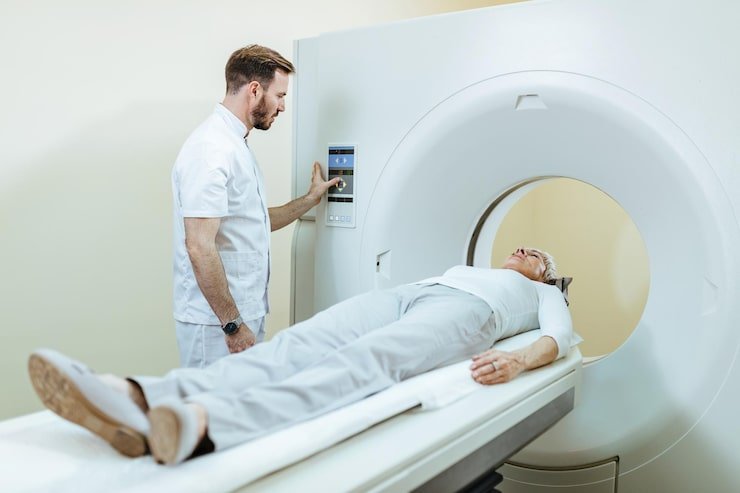
MRI Safe Patient Trolley for Safer Clinical Transfers
MRI departments require careful planning whenever patients, staff, and medical equipment enter the scanner environment. Unlike many other clinical areas, the MRI suite contains a powerful magnetic field that can create serious risks for equipment that is not specifically designed for use around MRI systems. This makes appropriate patient transfer equipment an important part of clinical safety.
An MRI safe Patient trolley can support controlled patient movement while helping healthcare teams maintain appropriate safety practices around MRI facilities. For NHS Trusts and private healthcare providers, selecting suitable equipment is particularly important when patients need assistance before, during, or after an MRI examination
Aayan Medical Imaging Limited supports healthcare providers across the United Kingdom with medical equipment designed around the practical requirements of modern clinical environments.
Why MRI-Compatible Patient Transfer Matters
Moving a patient into an MRI department is not simply a routine transfer. The environment requires healthcare professionals to consider the magnetic field, the patient’s clinical condition, and the suitability of every item brought into the scanner area.
A patient may arrive from a ward, emergency department, operating area, or another clinical unit. Depending on their condition, walking independently to the MRI table may not be appropriate.
A suitable trolley provides a stable platform for transferring patients while allowing staff to manage movement more efficiently.
Managing the MRI Environment
MRI safety procedures require careful control of equipment entering restricted areas. Standard hospital trolleys may contain materials or components that are unsuitable around the magnet.
Using equipment specifically intended for MRI environments helps healthcare teams follow established departmental procedures and reduces the risk associated with unsuitable equipment being brought too close to the scanner.
Supporting Patient Transfers During MRI Pathways
Patient movement can involve several stages, including arrival at the imaging department, preparation, transfer to the scanner table, and movement away from the MRI area.
An appropriate trolley can be particularly useful when a patient has:
- Limited mobility
- Reduced strength or balance
- Post-operative restrictions
- Acute illness
- Physical discomfort
- A requirement for assisted transfer
The equipment should complement the clinical team’s established patient-handling procedures rather than replace them.
Key Features to Assess Before Selection
Healthcare organisations should assess equipment according to their specific MRI department requirements rather than choosing solely on appearance or price.
MRI Safety Classification
The first consideration is whether the trolley is appropriately designed and classified for the intended MRI environment. Healthcare teams should review manufacturer documentation and follow the requirements of the specific MRI installation.
Patient Support
A trolley should provide an appropriate surface for the patient’s size, condition, and intended transfer process. Stable positioning can contribute to a more controlled clinical workflow.
Manoeuvrability
MRI departments can include corridors, preparation spaces, doors, and restricted access areas. Equipment that can be handled appropriately by trained staff can make patient movement more manageable.
Cleaning Requirements
Patient transfer equipment is used across clinical environments and therefore needs to support effective cleaning and infection-control procedures. Surfaces and construction should be considered in line with the healthcare provider’s cleaning protocols.
Why Patient Handling Requires Extra Attention in MRI
Patient safety does not stop at the scanner itself. Transfers before and after imaging can also present challenges.
For example, a patient experiencing weakness may require additional assistance when moving between a bed and trolley. Someone recovering from surgery may have movement restrictions that require careful handling.
The trolley should therefore be considered as one part of a wider patient-transfer process involving trained staff, appropriate techniques, and departmental safety procedures.
Choosing Equipment for NHS and Private Healthcare Settings
NHS Trusts and private healthcare providers often have different operational demands, but both require equipment that can integrate into clinical workflows.
When evaluating an MRI safe Patient trolley, procurement teams can consider factors such as intended MRI location, patient capacity, dimensions, cleaning procedures, manoeuvrability, documentation, and compatibility with existing patient-handling practices.
It is also useful to consider how the equipment will be used beyond a single imaging appointment. Frequent use can place greater importance on durability, maintenance requirements, and ease of handling.
The Role of Reliable Medical Equipment Supply
Selecting suitable MRI equipment is an important procurement decision because patient handling, imaging workflow, and safety procedures are closely connected.
Aayan Medical Imaging Limited works with healthcare providers across the UK, supporting NHS Trusts and private healthcare organisations with medical equipment requirements.
The right MRI safe Patient trolley can help create a more controlled transfer process when used correctly within established MRI safety procedures. Healthcare teams should always verify the equipment’s documented MRI suitability before use.
FAQs
What is an MRI safe patient trolley?
It is a patient transfer trolley specifically designed for use in or around MRI environments according to its stated safety classification and manufacturer guidance.
Why is ordinary hospital equipment unsuitable for MRI areas?
Some equipment may contain ferromagnetic materials or other components that can create hazards around a strong magnetic field. Equipment suitability should always be verified before entering controlled MRI areas.
Who can benefit from an MRI patient trolley?
Hospitals, diagnostic imaging departments, NHS Trusts, private clinics, and other healthcare organisations may use suitable patient transfer equipment where patients require assisted movement during MRI pathways.
What should healthcare providers check before purchasing one?
They should review MRI safety classification, patient capacity, dimensions, manoeuvrability, cleaning requirements, documentation, and compatibility with their department’s procedures.
Improve MRI Patient Transfer Safety
Patient movement is a critical part of the imaging journey, particularly for people who cannot safely walk to the MRI scanner. Choosing equipment that is appropriate for the clinical environment can support safer and more organised transfers.
For NHS Trusts and private healthcare providers seeking suitable MRI equipment in the UK, Aayan Medical Imaging Limited can support medical equipment requirements with a healthcare-focused approach. Contact the team to discuss your department’s patient transfer needs.
