




High-Quality MRI Safe Patient Trolley Solutions
The Equipment That Quietly Protects Every MRI Patient
There is a piece of equipment sitting at the heart of every well-functioning MRI suite that rarely makes headlines but absolutely should. The MRI safe patient trolley is not simply a bed on wheels — it is a precision-crafted safety solution built for one of the most magnetically intense environments in modern healthcare. Did you know that an MRI scanner generates a magnetic field roughly 60,000 times stronger than the Earth’s own? Even a tiny ferromagnetic screw near that field can become a dangerous flying object in seconds. That is the kind of environment where every single piece of equipment has to earn its place.
Why Standard Trolleys Simply Do Not Belong Inside an MRI Suite
Here is something many people outside the radiology world do not fully appreciate. Not every trolley labeled “hospital-grade” is appropriate for MRI environments. A standard trolley — no matter how well-built — likely contains ferromagnetic steel components that interact dangerously with the scanner’s magnetic field. An MRI safe patient trolley on the other hand is constructed entirely from non-ferromagnetic materials such as aerospace-grade aluminum alloys or high-strength polymers that produce zero magnetic interference. These materials are evaluated against internationally recognized MR Safe and MR Conditional classifications set by ASTM International. The difference is not marginal — it is the difference between clinical safety and a genuine medical emergency.
What Defines a Truly High-Quality MRI Safe Patient Trolley
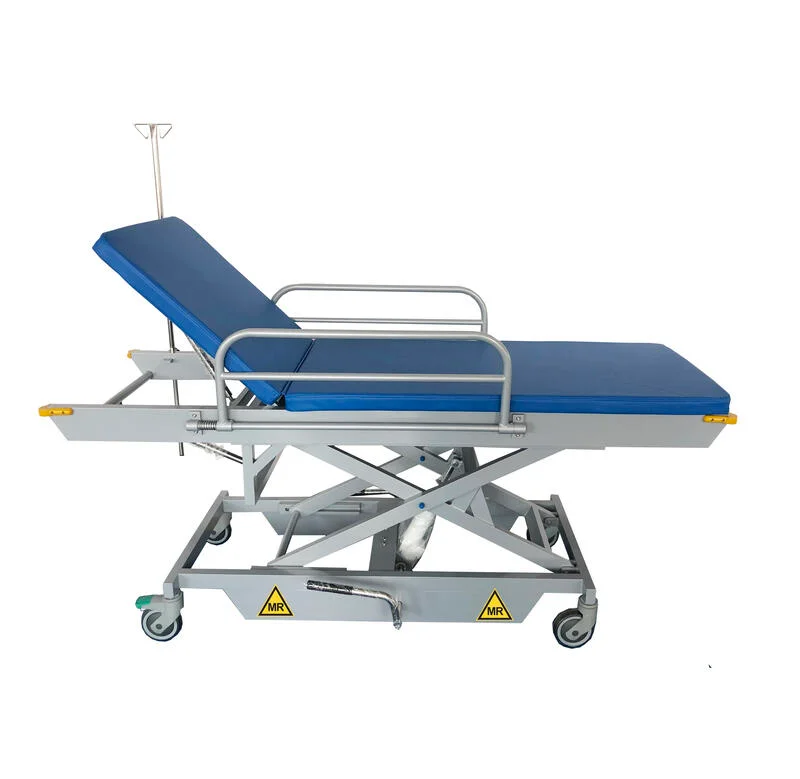
So what separates a premium solution from a mediocre one? A high-quality MRI safe patient trolley delivers far more than basic compliance. Radiologists and MRI technicians working with top-tier models typically highlight several standout features. Smooth-glide non-metallic wheels allow effortless navigation through narrow corridors without friction or resistance. Height-adjustment mechanisms engineered from non-magnetic components make patient transfers both safe and efficient.
Ergonomic padding systems reduce patient discomfort during transfers — which matters enormously for anxious or post-procedure patients. Some leading manufacturers have even started incorporating carbon fiber composite frames. Carbon fiber is stronger than steel at a fraction of the weight and carries no magnetic properties whatsoever. That is genuinely impressive materials engineering applied to a real clinical problem.
Patient Safety and Comfort Work Together Here
Have you ever considered how a patient feels being transferred into an MRI scanner? The environment itself can be intimidating — the noise, the enclosed space and the unfamiliar clinical setting. A well-designed MRI safe patient trolley with smooth transfer capabilities and pressure-reducing padding makes that journey noticeably less stressful. Facilities that upgrade to premium MRI-compatible trolleys consistently report improvements in patient compliance and satisfaction scores. Beyond comfort there is the practical reality of clinical workflow. A trolley that is easy to position precisely next to the scanner bore saves technicians valuable time and reduces the physical strain of repeated manual adjustments throughout a demanding shift.
Regulatory Standards Are Not Optional — They Are the Baseline
Every radiology department operating an MRI suite must comply with guidelines issued by bodies like the FDA and the Joint Commission. Using non-compliant patient transport equipment is not just a safety oversight — it carries serious legal and accreditation consequences. Incidents have occurred globally where non-MRI-safe equipment caused catastrophic accidents. A certified MRI safe patient trolley guarantees that zone 3 and zone 4 MRI environments remain exactly as safe as they are designed to be. Compliance is the floor not the ceiling and the best facilities treat it that way.
A Forward-Thinking Investment for Modern Radiology Facilities
Upgrading to a high-quality MRI safe patient trolley is the kind of decision that pays dividends across safety culture, clinical efficiency and patient experience simultaneously. Facilities that take MRI equipment compatibility seriously demonstrate a commitment to excellence that staff and patients both notice and appreciate. Whether the facility serves a high-volume NHS trust or a specialist private imaging center the right trolley solution elevates the entire standard of care delivered inside the MRI suite.
For anyone actively searching for reliable MRI safe patient trolley solutions in the UK market one resource worth exploring is Aaryan Medical Imaging Ltd — a specialist provider in high-quality MRI-compatible imaging equipment offering some of the most trusted patient trolley solutions available today.
Frequently Asked Questions (FAQs)
Q1. What does “MR Safe” actually mean for a patient trolley?
MR Safe means the item presents no known hazard in any MRI environment under any conditions. An MRI safe patient trolley carrying this classification can be used freely inside all MRI zones without restriction.
Q2. Is it possible to modify a standard trolley for MRI use?
No. Standard hospital trolleys contain ferromagnetic materials that cannot be safely removed or substituted. Only purpose-manufactured MRI safe patient trolleys built entirely from non-magnetic components should enter MRI zone 3 or zone 4 areas.
Q3. How frequently should an MRI safe patient trolley be inspected?
Annual inspection by a qualified MRI safety officer is the widely accepted standard. Regular checks ensure no components have been inadvertently swapped for non-compliant parts during routine maintenance.
Q4. Do MRI safe patient trolleys support bariatric patients?
Many premium MRI safe patient trolley models are specifically engineered with higher weight capacities while maintaining full MRI compatibility. Always verify the manufacturer’s stated load rating before clinical use.
Q5. How does an MRI safe patient trolley improve clinical workflow?
Its non-metallic wheels and ergonomic design allow faster positioning beside the scanner bore. This reduces transfer time per patient and lowers physical strain on MRI technicians across a full working day.
