





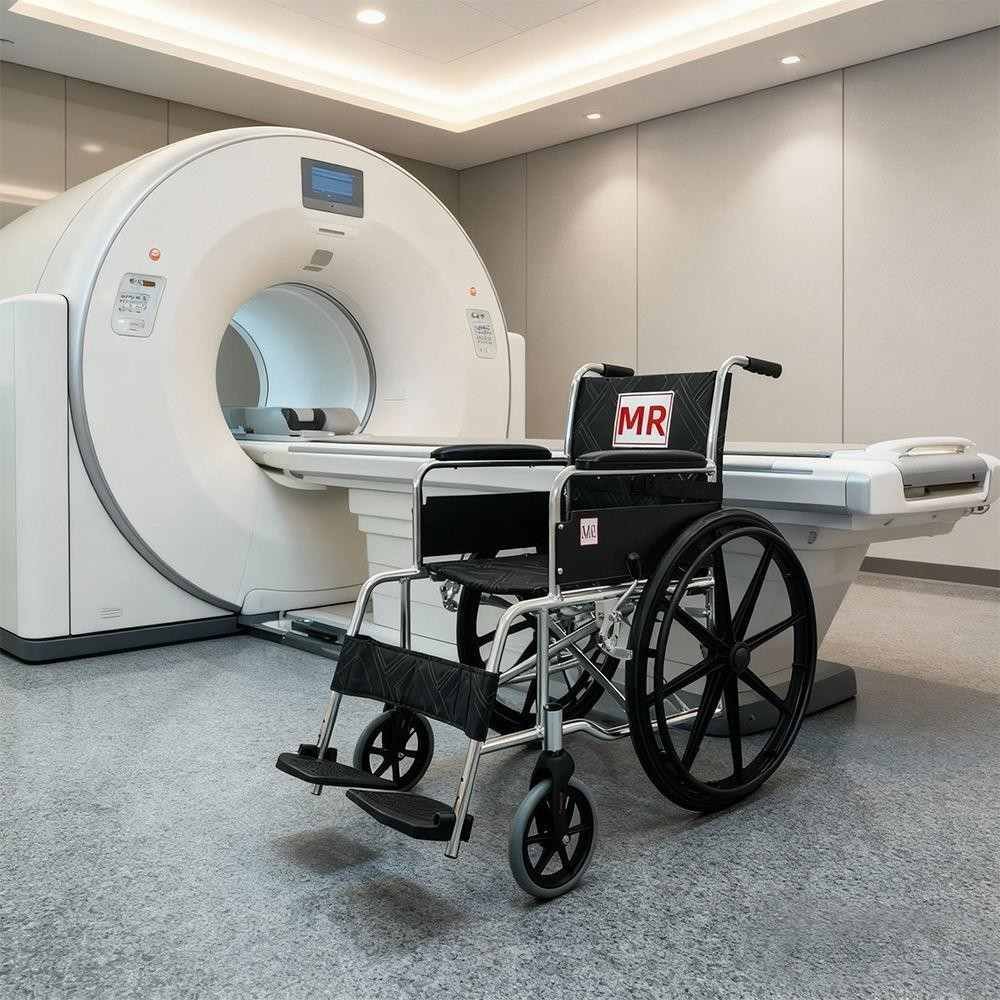
1.5T and 3.0T MRI Wheelchair: A Complete Guide to Safe and MRI-Compatible Mobility
Magnetic Resonance Imaging (MRI) plays an important role in modern healthcare by helping medical professionals examine internal organs and tissues without surgery. However. the powerful magnetic fields used in MRI scanners require specialised equipment that meets strict safety requirements. One essential example is an MRI-compatible wheelchair designed to support patients who need assistance with mobility before or after a scan.
Choosing the right 1.5T and 3.0T MRI Wheelchair helps healthcare facilities maintain patient safety while improving comfort and accessibility. Understanding the differences between MRI systems and wheelchair compatibility can help hospitals. diagnostic centres and medical equipment buyers make informed decisions.
What Is an MRI-Compatible Wheelchair?
An MRI-compatible wheelchair is specifically designed for use in environments where magnetic resonance imaging equipment operates. Unlike conventional wheelchairs. which may contain ferromagnetic metals. MRI-compatible models use carefully selected materials to reduce magnetic interference and related safety risks.
Why does this matter? MRI scanners generate strong magnetic fields that can attract certain metallic objects. Ordinary wheelchairs must therefore remain outside restricted scanning areas unless their safety has been specifically established.
MRI-compatible wheelchairs support the safe movement of patients through appropriate clinical areas. They may feature non-ferromagnetic construction. durable frames. Comfortable seating and easy-to-clean surfaces. These characteristics make them suitable for demanding healthcare environments.
Understanding 1.5T and 3.0T MRI Wheelchair Requirements
MRI scanners are commonly described by their magnetic field strength. measured in tesla (T). Two widely used strengths are 1.5T and 3.0T.
A 1.5T scanner is frequently used for routine diagnostic examinations involving the brain. spine. joints and other body regions. A 3.0T scanner provides a stronger magnetic field and can offer increased signal-to-noise ratios for certain examinations. potentially supporting more detailed imaging depending on the application and scanning protocol.
Does a wheelchair approved for a 1.5T scanner automatically qualify for use near a 3.0T scanner? No. Compatibility must be established for the specific scanner environment and the manufacturer’s documented conditions of use.
When selecting a 1.5T and 3.0T MRI Wheelchair healthcare providers should check the manufacturer’s labelling and safety documentation. The equipment should be suitable for the intended magnetic field strength and permitted location within the MRI facility.
Key Features to Consider Before Purchasing
Selecting appropriate equipment involves more than comparing prices. Healthcare providers should evaluate several practical features.
1. MRI safety and material construction
The wheelchair should have documented MRI safety information. Its materials and components must meet the requirements for the intended scanning environment.
2. Patient comfort and support
Padded seating. supportive backrests and suitable armrests can improve comfort during transfers and waiting periods. The design should accommodate the needs of the intended patient population.
3. Durability and manoeuvrability
A lightweight construction can make routine handling easier for trained staff. Smooth-rolling wheels and a manageable turning radius can help the wheelchair navigate suitable clinical corridors.
4. Hygiene and maintenance
Healthcare environments require equipment that can be cleaned efficiently. Surfaces should withstand the cleaning products and procedures recommended by the manufacturer.
5. Weight capacity and dimensions
The wheelchair should accommodate the intended patient’s weight and body dimensions. Buyers should also check doorway clearance. storage requirements and transfer arrangements.
Benefits for Hospitals and Diagnostic Imaging Centres
A suitable 1.5T and 3.0T MRI Wheelchair can contribute to a more organised patient journey. Patients with limited mobility may require assistance when travelling from reception to changing areas and designated MRI preparation spaces.
For example, an older adult attending a spinal MRI appointment may struggle to walk long distances. An appropriate wheelchair can reduce physical exertion and make movement through the facility more manageable.
MRI-compatible mobility equipment can also help staff follow established safety procedures. However, it does not replace screening protocols or remove the need to control access to restricted MRI areas.
Essential MRI Wheelchair Safety Guidelines
Safety remains the highest priority around MRI equipment. Staff should verify the wheelchair’s compatibility classification and follow the manufacturer’s instructions before bringing it into a controlled MRI environment.
The three commonly used MRI safety classifications are:
- MR Safe: The item presents no known hazards in any MRI environment under the conditions specified by the relevant standard.
- MR Conditional: The item is safe only under clearly defined conditions.
- MR Unsafe: The item is known to pose hazards in an MRI environment.
Staff should never assume that a wheelchair is suitable simply because it contains non-magnetic materials. Its complete design and documented testing matter. Routine checks should also identify loose components. damaged wheels and other defects before use.
Where to Find a Suitable MRI Wheelchair
Healthcare providers seeking reliable imaging accessories should compare product specifications. safety documentation and intended applications before making a purchase.
For more information about MRI-compatible wheelchairs and medical imaging equipment. readers can visit the Google Business Profile of Aayan Medical Imaging Limited to explore the business details and find relevant information about available medical equipment solutions.
Frequently Asked Questions
1. What is a 1.5T and 3.0T MRI wheelchair?
It refers to an MRI-compatible wheelchair intended for use in facilities with 1.5-tesla or 3.0-tesla MRI scanners. Actual suitability depends on the manufacturer’s documented compatibility conditions.
2. Can a standard wheelchair be used inside an MRI room?
A conventional wheelchair should not be taken into the MRI environment unless its safety has been specifically established for that use. Ferromagnetic components can create serious hazards.
3. Is a 1.5T MRI wheelchair automatically safe for a 3.0T scanner?
No. Compatibility with one magnetic field strength does not automatically establish compatibility with another. The manufacturer’s documentation and scanner-specific conditions must be checked.
4. What features should buyers look for in an MRI-compatible wheelchair?
Important considerations include documented MRI safety classification. weight capacity. patient comfort. maneuverability. durability and ease of cleaning.
5. Where can healthcare facilities find MRI-compatible medical equipment?
Hospitals and diagnostic centres can explore specialist suppliers such as Aayan Medical Imaging Limited to learn about medical imaging equipment and identify suitable purchasing options.
Conclusion
Choosing MRI-compatible mobility equipment is an important part of creating a safer and more accessible diagnostic environment. The right selection depends on verified MRI compatibility. patient comfort. practical handling and the specific needs of the healthcare facility.
By evaluating these factors carefully. hospitals and imaging centres can support patients throughout their diagnostic journey while maintaining established safety standards. Aayan Medical Imaging Limited supports healthcare professionals in exploring medical imaging equipment solutions that align with their operational needs. A well-informed purchasing decision helps ensure that mobility equipment serves its purpose while maintaining the safety standards required for MRI examinations.
